Medically reviewed by Dr Prratyush More, MBBS, DDVL (Dermatology, Venereology & Leprology)
Summary: Hair transplants are widely misunderstood in both directions. They are not as painful as people fear, modern results do not look “pluggy,” and age is not the deciding factor. But they are also not a simple cosmetic touch-up: a transplant is surgery, your donor supply is finite, not everyone is a candidate, and it does not stop ongoing hair loss. The most important myth of all in India is that anyone can perform one — regulations are explicit that they cannot.
Hair transplants have a reputation problem that runs in two directions. Some myths frighten good candidates away from a procedure that would work well. Others make it sound simpler and safer than it is, which is how people end up in salons paying for surgery from someone unqualified to perform it.
Here are seven, and what is actually true.
Myth 1: Hair Transplants Are Agonising
The procedure is performed under local anaesthesia, so the scalp is fully numbed before any work begins. During the transplant itself you should feel pressure, not pain.
Two honest caveats, though. The anaesthetic injections at the start are the genuinely uncomfortable part, and there is no getting around them — though most surgeons use techniques to reduce this. And a session typically runs six to ten hours. The endurance of a long day, and soreness in the donor area for a few days afterwards, are more realistic things to prepare for than “pain.”
Recovery discomfort — tightness, itching — is normal and usually managed with simple pain relief. Avoid aspirin and anti-inflammatory painkillers in the early days unless your surgeon says otherwise, because of bleeding risk.
Myth 2: Modern Transplants Look Fake or “Pluggy”
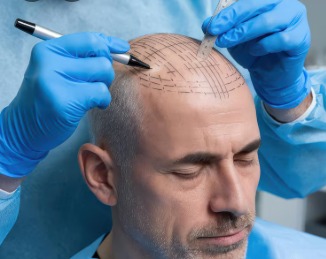
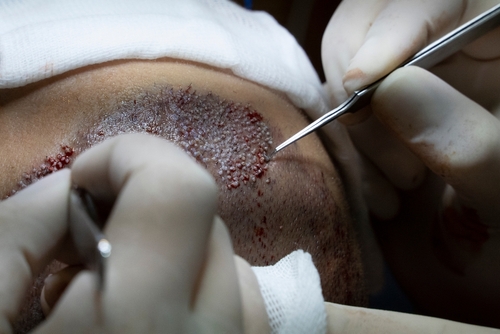
The pluggy look comes from techniques used decades ago, which moved large clusters of hair rather than individual follicular units. Modern FUE and FUT transplant natural follicular groupings, which is what produces a believable hairline.
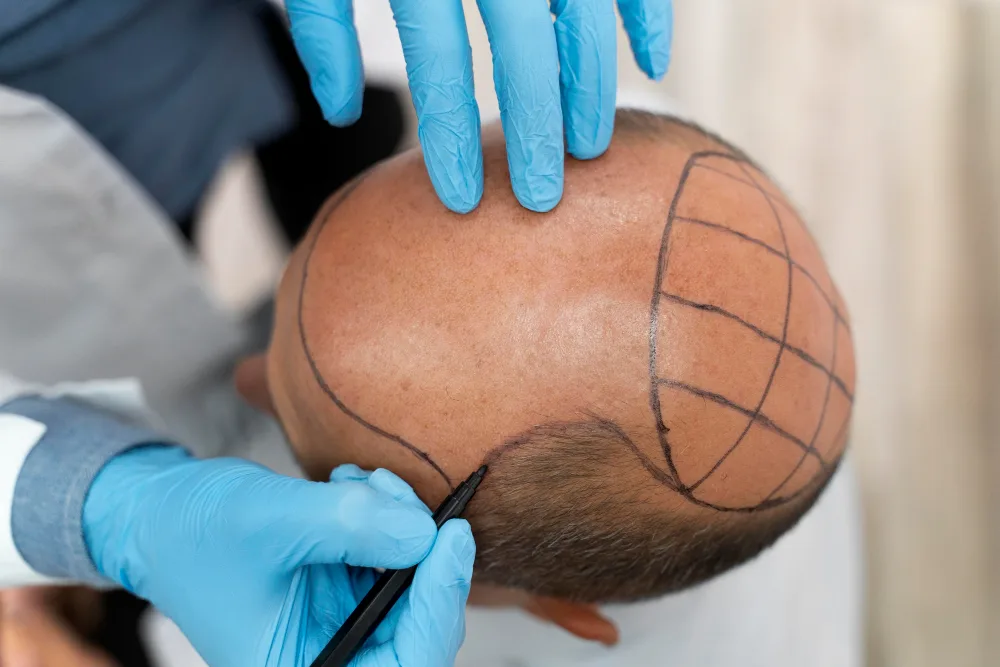
But technique alone does not guarantee a natural result. A well-planned transplant accounts for hair growth direction, angle, density gradients and deliberate irregularity along the hairline — the small imperfections that make it look untouched. Poor results still happen today, and the usual causes are design rather than technology: a hairline placed too low or too straight for the patient’s age, or a transplant done without accounting for how the surrounding hair will continue to recede.
Myth 3: Transplants Are Only for Older Men
Age is not the criterion. Stability of the hair loss pattern, adequate donor density and realistic expectations are.
The caution around young patients is worth stating more strongly than it usually is. In your early twenties, the pattern is rarely settled, and the risk is not simply “you might need another procedure.” It is that a hairline transplanted at 24 can end up stranded in front of a zone that keeps thinning, with donor hair already spent on it — a result that looks worse than the original loss and is difficult to correct.
Stabilising with medical treatment first, and transplanting once the pattern is clearer, is not a delay tactic. It protects a finite resource.
Myth 4: You Can Always Get More Hair If You Need It
This one is rarely stated as a myth, and it underpins everything else.
Your donor area holds a fixed lifetime supply of grafts. Every graft moved is permanently gone from the back and sides. That total sets a ceiling on how much coverage you can ever achieve, across all procedures you will ever have.
It is why over-harvesting is a real harm rather than a cosmetic quibble, why aggressive early hairlines are a trap, and why a surgeon who talks you down from maximum coverage is often the one protecting your long-term result.
Myth 5: Every Patient Gets the Same Results
Outcomes vary with donor density, hair calibre, curl, hair-to-scalp colour contrast, extent of baldness and surgical planning. Two people receiving the same number of grafts can end up looking noticeably different. Thicker and curlier hair covers more scalp per graft; lower contrast between hair and skin gives an impression of greater density.
This is why an in-person assessment predicts your result and someone else’s before-and-after photo does not.
Results also take time: new growth generally begins at three to four months, becomes convincing between six and twelve, and the final result is judged at twelve to eighteen months.
Myth C: Anyone Offering the Procedure Is Qualified to Do It
This is the most important myth in the Indian context, and the one most likely to cause serious harm.
Hair transplantation is surgery, and only registered medical practitioners of modern medicine may perform it.
National Medical Commission guidance issued in September 2022 recommends that hair transplantation be undertaken preferably by those with formal surgical grooming, naming MCh or DNB in Plastic Surgery, and MD or DNB in Dermatology with adequate training in dermatological surgical procedures — specialities whose curricula cover hair transplantation directly. Professional guidance in India has also recognised holders of dermatology diplomas, such as DVD and DDVL, alongside these degrees.
What is not in dispute is the floor: the person operating must be a qualified, registered doctor with genuine surgical training, and their qualification should be stated openly rather than implied.
Technicians may assist. They may not make incisions, extract or implant grafts, or administer anaesthesia. The practice of a patient believing a doctor will operate while technicians actually perform the surgery — sometimes called “ghost surgery” — is precisely what regulators have been trying to stop.
The consequences of getting this wrong have included deaths. The Delhi High Court has taken up the case of a man in his thirties who died of septic shock with multiorgan failure following a transplant performed at a salon, and directed authorities to act against unqualified operators.
Questions worth asking before you book:
- Who will actually perform the extraction and implantation, and what is their medical qualification and registration number?
- Will that person be present for the whole procedure?
- What emergency arrangements does the facility have, and where would I be referred?
- What is the total graft count, and how does it fit my long-term donor supply?
A clinic that answers these plainly is telling you something useful. One that deflects is telling you something more useful still.
Myth 7: A Transplant Stops Future Hair Loss
A transplant relocates follicles that are resistant to the hormone driving pattern baldness. It does nothing to the untransplanted hair, which continues to thin on its own schedule.
Without ongoing medical treatment, native hair recedes around and behind the transplanted area, which over several years can leave an island of transplanted hair. This is one of the commonest reasons a technically excellent transplant looks wrong later.
Finasteride and topical minoxidil are the usual mainstays. Both are medical treatments requiring a prescription and a proper conversation about side effects, and finasteride is contraindicated in women who may become pregnant.
Two Things a Myths List Usually Leaves Out
Not everyone is a candidate. Insufficient donor density, hair loss that is diffuse rather than patterned, and active scarring alopecias such as lichen planopilaris or frontal fibrosing alopecia are all reasons a transplant will disappoint or fail outright — grafts placed into an active scarring process do not survive. Alopecia areata is a contraindication. A proper assessment should rule these out before any surgery is discussed, and a diagnosis-first clinic will sometimes tell you the answer is medical treatment, not surgery.
Women are candidates too — sometimes. Female pattern hair loss is common and the whole conversation is usually framed around men. Women can be excellent candidates where loss is patterned and the donor area is dense. They are often poor candidates where thinning is diffuse and includes the donor region, since transplanting from a thinning donor simply moves the problem.
And it is surgery, with surgical risks. Infection, folliculitis, poor graft survival, temporary numbness, a linear scar with FUT or dot scars with FUE, and a visibly depleted donor area if over-harvested. These are uncommon in careful hands, which is exactly the point of the previous section.
Frequently Asked Questions
Does it hurt? Not during the procedure, thanks to local anaesthesia. The numbing injections are uncomfortable, the day is long, and the donor area is sore for a few days.
Will people be able to tell? With good planning, no. Unnatural results today usually come from hairline design and failure to plan for ongoing loss, rather than from the technique itself.
Am I too young? Possibly, if your loss is still actively progressing. The concern is spending finite donor hair on a hairline that ends up isolated as loss continues. Stabilising medically first is often the better route.
Will my result match the photos I’ve seen? Not necessarily. Donor density, hair thickness, curl, colour contrast and extent of loss all differ. Only an in-person assessment predicts your own outcome.
Do I still need minoxidil or finasteride afterwards? Usually yes, to protect the hair that was not transplanted. Both need a prescription and a discussion of side effects.
How do I check my surgeon is qualified? Ask for their medical qualification and registration number, confirm they personally perform the extraction and implantation, and ask what happens in an emergency. Regulations require a qualified, registered doctor with surgical training — not a technician — to perform the surgical steps.
When will I see the final result? Growth starts around months three to four; the final result is assessed at twelve to eighteen months.
Getting an Honest Assessment
Believing these myths leads to one of two outcomes: avoiding a procedure that would have worked well, or going ahead with expectations it was never going to meet — or, worse, in the hands of someone unqualified to perform it.
A proper consultation should cover your donor supply, whether your pattern is stable, whether a transplant is even the right answer for your diagnosis, what medical treatment you will need alongside it, and who will be performing the surgery.
Book a consultation and get an honest assessment for your specific case.
This article is for general information and does not replace individual medical advice. Hair transplantation is a surgical procedure that should be performed by an appropriately qualified and registered medical practitioner.