Written and medically reviewed by: Dr. Prratyush More, MBBS, DDVL| Roots Restore, Thane
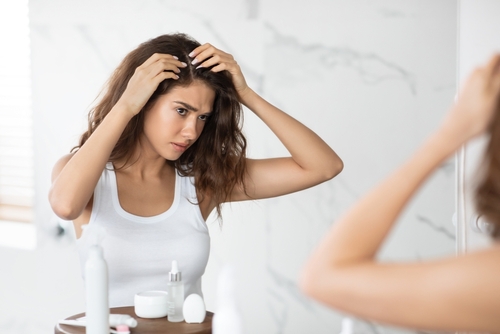
Seeing more hair in the shower drain, on your pillow or in your comb can be alarming, especially in your twenties or thirties, when you may not expect it. The good news is that many of the most common causes in this age group are temporary or treatable, particularly when they are identified early.
First, some perspective. At any time, about 85 to 90% of scalp hairs are in the growing phase (anagen), which lasts several years, and about 10 to 15% are in the resting phase (telogen), which lasts around three months before the hair sheds. Because of this constant turnover, losing around 50 to 100 hairs a day is normal. You may notice more on hair-wash days, or if your hair is long. Hair fall becomes a concern when it is clearly more than your usual, lasts for months, or when your hair is visibly thinner.
It also helps to separate two different problems. Shedding (hair falling out from the root, often with a tiny white bulb at the end) usually points to a change in the hair cycle. Breakage (short, snapped hairs without a bulb) usually points to damage to the hair shaft from styling or chemicals. Thinning (less hair over time, often without dramatic shedding) is typical of pattern hair loss. Each has different causes.
| In brief
• The most common causes in young women include shedding after illness or stress, after childbirth, hormonal conditions such as PCOS, thyroid problems, low iron stores, tight hairstyles and early female pattern hair loss. • Often more than one cause is present at the same time. • Most causes are identifiable with a scalp examination and, where needed, a few targeted blood tests. • Treating the right cause matters more than trying many products. |
1. Shedding after illness, stress or a sudden change (telogen effluvium)
This is one of the most common causes of sudden, diffuse hair fall. A shock to the body pushes a larger than usual number of growing hairs into the resting phase at the same time. Because the resting phase lasts about three months, they then fall out together, typically two to three months after the trigger, which is why the connection is often missed. The hair falls evenly from all over the scalp, and there are no bald patches. Shedding that lasts longer than about six months is described as chronic telogen effluvium and deserves a closer look for ongoing causes.
Common triggers include high fever (for example, from dengue, typhoid, COVID-19 or other infections), surgery, major emotional stress, crash dieting or rapid weight loss, and starting or stopping certain medicines. Once the trigger has passed, the shedding usually settles over about six to nine months, and the hair gradually recovers.
2. After pregnancy (postpartum shedding)
During pregnancy, high hormone levels keep more hairs in the growing phase, so many women notice thicker hair. After delivery, those hairs move into the resting phase together. Shedding usually starts around two to four months after childbirth, and can be heavy. For most women, hair returns to its usual pattern by around a year after delivery. If shedding continues beyond that, or the hair stays noticeably thinner, it is worth getting checked.
3. Early female pattern hair loss
Female pattern hair loss can begin as early as the twenties. Rather than heavy shedding, it usually shows up as gradual thinning over the top of the head and a widening central parting, often with a “Christmas tree” pattern that is wider towards the front, while the front hairline stays in place. Affected follicles progressively shrink (miniaturise) and produce finer hairs. Genetics play a major part. Androgens contribute in some women, but many women with female pattern hair loss have completely normal hormone levels. It is a progressive condition, but early treatment can help slow it and, in many cases, improve density.
4. PCOS and other hormonal imbalances
Polycystic ovary syndrome (PCOS) is common in young women. Higher levels of androgens (hormones usually thought of as “male” hormones, which women also produce) can contribute to thinning on the top of the scalp. Clues include irregular periods, acne, excess facial or body hair, and weight changes. Managing PCOS with a doctor’s guidance can help both the hair and overall health.
5. Thyroid problems
Both an underactive thyroid (hypothyroidism) and an overactive thyroid (hyperthyroidism) can cause diffuse hair thinning. Other signs may include tiredness, weight changes, feeling unusually cold or hot, changes in periods, a racing heart or dry skin. A simple blood test can check thyroid function. Hair usually improves once thyroid levels are well controlled, though this takes months.
6. Low iron stores and other nutritional gaps
Iron deficiency is common among young women in India, due to heavy periods, pregnancy and diets low in iron. Several studies have linked low iron stores (measured as ferritin) to increased hair shedding, including in women whose haemoglobin is still normal. However, the research is not fully consistent, and experts still debate the exact ferritin level that matters for hair. Your doctor will interpret the result alongside your overall health, as ferritin can also be falsely normal during infection or inflammation.
Other nutritional factors include low protein intake, very low calorie diets, and, particularly in vegetarians, low vitamin B12. The evidence linking vitamin D and zinc to hair loss is mixed. Importantly, take supplements only after testing and on medical advice: too much iron or vitamin A can be harmful, and high-dose biotin can interfere with some laboratory tests, including thyroid tests, a problem the US FDA has issued safety warnings about. Biotin deficiency itself is rare, and there is little evidence that biotin helps hair in people who are not deficient.
7. Hairstyles and hair treatments
Repeatedly pulling hair tight, with high buns, tight ponytails, braids or extensions, can cause traction alopecia, usually seen as thinning along the front hairline and temples. If the pulling continues over years, it can become permanent. Frequent heat styling, bleaching, chemical straightening, smoothening and keratin treatments mostly cause hair breakage rather than loss from the root, but they can make hair look much thinner. Gentler styling and giving hair breaks between treatments help.
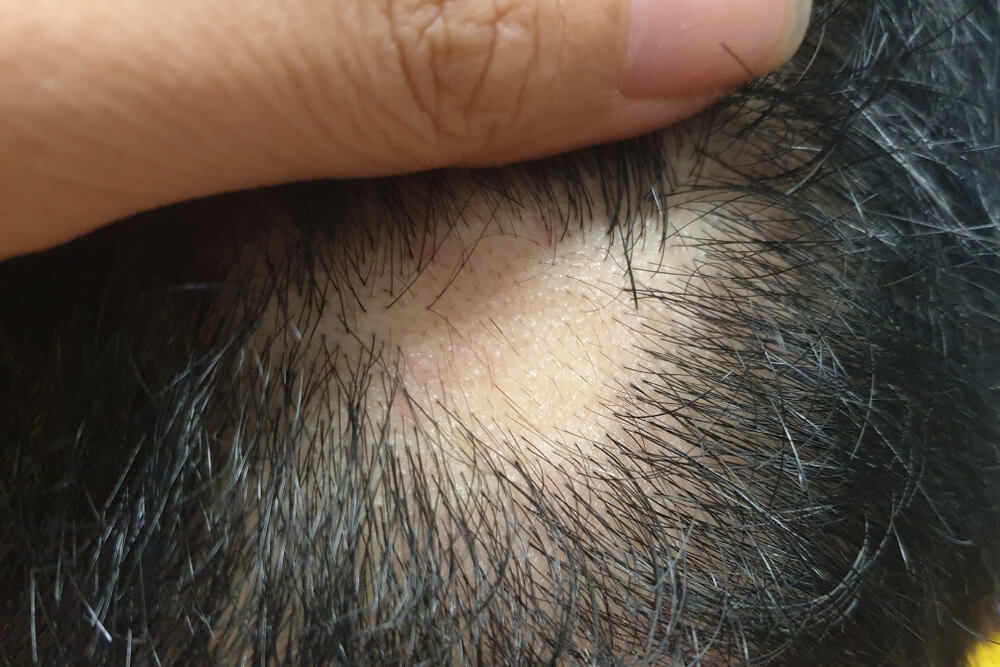
8. Alopecia areata
If your hair is falling out in round, smooth, well-defined patches, the cause may be alopecia areata, an autoimmune condition. It needs a dermatologist’s assessment, and several treatment options exist.
9. Scalp conditions
Seborrhoeic dermatitis (a common cause of dandruff), psoriasis and, less often in adults, fungal infection of the scalp can cause itching, flaking and inflammation, and may contribute to hair fall. Treating the scalp condition is an important part of managing the hair fall.
10. Medicines and contraceptive pill changes
Starting or stopping hormonal contraceptive pills can trigger shedding in some women. Certain other medicines can also contribute, including some used for acne, thyroid conditions, seizures, mood disorders and blood clotting. Do not stop any prescribed medicine on your own. Speak to the doctor who prescribed it, as there may be alternatives.
Common myths
| Myth | What is actually known |
| Washing your hair often makes it fall out | Hairs that fall during washing were already loose. Washing does not cause hair loss, and a clean scalp is healthier. |
| Oiling will stop hair fall | Oiling can make hair feel softer and reduce breakage, but it does not treat the medical causes of hair fall. |
| Hair supplements help everyone | Supplements help when you are actually deficient. If you are not, they are unlikely to help, and some can be harmful in excess. |
| Cutting hair short makes it grow back thicker | Cutting does not change the number or thickness of hairs growing from the scalp. |
When to see a doctor
- Heavy shedding that continues for more than about three months
- A visibly wider parting, thinner ponytail or more scalp showing
- Round bald patches, or hair loss along the hairline
- Itching, pain, redness or scaling of the scalp
- Hair fall along with irregular periods, acne, excess facial hair, tiredness or weight changes
- Shedding that continues for more than a year after childbirth
What a doctor may check
A dermatologist will usually ask about your recent health, diet, periods, pregnancies, medicines and hair care, and examine your scalp. A gentle hair pull test helps judge how actively hair is shedding, and trichoscopy (a magnified scalp examination) can help tell telogen effluvium apart from early female pattern hair loss, alopecia areata or scalp inflammation. Depending on what they find, they may suggest blood tests such as a blood count, ferritin, thyroid function, vitamin B12 or vitamin D, and hormone tests if PCOS is suspected. Not everyone needs every test, and the right tests depend on your history.
Because more than one cause is often present, for example low iron along with stress-related shedding, a proper assessment is the most reliable way to know what will actually help.
Important note
This article is for general health education only. It is not a substitute for an in-person consultation, diagnosis or treatment. The suitability and results of any treatment vary from person to person, and no treatment can promise a particular outcome. Please consult a qualified Registered Medical Practitioner about your own situation.
References
- Malkud S. Telogen effluvium: a review. J Clin Diagn Res. 2015;9(9):WE01–WE03.
- Carmina E, Azziz R, Bergfeld W, et al. Female pattern hair loss and androgen excess: a report from the multidisciplinary Androgen Excess and PCOS Committee. J Clin Endocrinol Metab. 2019;104(7):2875–2891.
- Trost LB, Bergfeld WF, Calogeras E. The diagnosis and treatment of iron deficiency and its potential relationship to hair loss. J Am Acad Dermatol. 2006;54(5):824–844.
- Almohanna HM, Ahmed AA, Tsatalis JP, Tosti A. The role of vitamins and minerals in hair loss: a review. Dermatol Ther (Heidelb). 2019;9(1):51–70.
- Billero V, Miteva M. Traction alopecia: the root of the problem. Clin Cosmet Investig Dermatol. 2018;11:149–159.
- US Food and Drug Administration. Biotin (vitamin B7): safety communication – may interfere with lab tests. 2017, updated 2019.